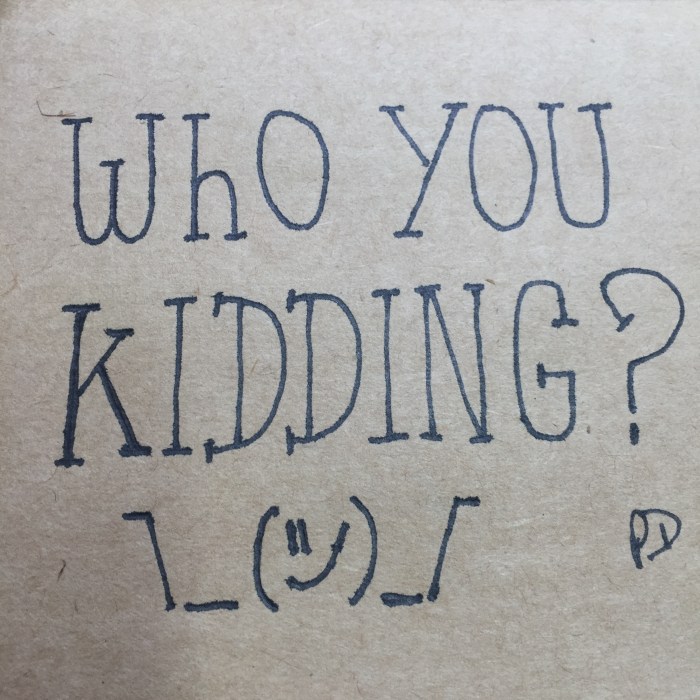
Who you kidding?

img_8878

We tell the world and ourselves sometimes that we are a particular thing or we are doing a particular activity. A common one is when exercising or dieting, we tell ourselves we ate carefully or walked x miles, when sometimes we didn’t. Short-term it makes us feel better inside.

We might say ‘I am writing a book’ to convince ourselves we are an author, yet we have not even written a single word, having the intention to do something, or adding it to an action list, does not mean that we have done it.

Yet the more we indulge in this habit of talking and not doing, the more we convince ourselves that we are actually an author, or a coach or a whatever we intend to be. Saying it does not make it so.

Surely it is better to try to do that thing, do the hard work, commit and even it fails, at least we had a go, learnt, and did it better the next time than it is to carry on kidding ourselves?

After all, we are expending that time and energy on kidding ourselves, much better to stop the drifting, the pretence, and just do it.

The chemical reward we get from doing makes us happier, healthier and leads to a longer life. The stress, fear, regret and often anger and frustration of not being or doing something makes us unhappy, unhealthy and leads to a shorter life.

It is only ourselves we are cheating as no one else really cares, they are too busy with their own lives and challenges.

Worry

IMG_6483

The thing with worry is it becomes a habit. Once we allow the fear of future outcomes to enter our heads too often, then even when things are running smoothly, there is a habitual tendency to search out for things to start worrying about.

Every single person worries. It is a normal thing.

It is how we choose to react to worry and the habit that we can form to lessen how often we worry that matters.

Normally when something is causing worries, then it matters or is important to us. So learning how to lessen worries will make a difference to the things that matter.

Worry leads to indecision.

Firstly, when something is troubling us, we need to assess a simple thing, is it something that I can do anything to affect the outcome of? Meaning, is it in my control?

Much of what we worry about, is in fact, how others might react, what another person might do to us, not will do to us!

However, we can not control that. So there is little point in worrying about the future reactions of what others will do.

The second action, following the above simple assessment, is if we can control it, then do something to change it. If we are worried about becoming overweight, well we can change our diet, change our exercise regime, we can change our mindset towards this too and so on.

That is the fact about most of the worries we have, is that we are using the fears or worries as an excuse not to change something. So starting of changing our mindset to something is essential.

Worry is always a futile activity. If we can’t change something, then don’t bother worrying. If we can change it, then change it, so no need to worry. If we don’t want to change it, then accept the likely outcome and don’t worry.

Like anything in life, the more often we practice this approach, the less we will worry and that will form a good habit of worrying less.