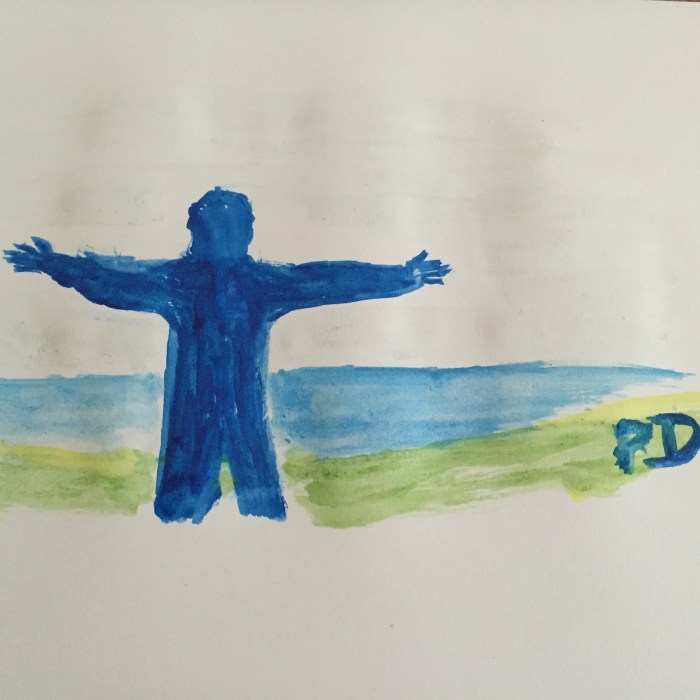
The power of openness

FullSizeRender (13)

Allowing ourselves to be open to different views, to our emotions and to other people gives us a power that once you discover it will make going back to being a closed person impossible.

We limit ourselves in life in so many ways by what we tell ourselves about ourselves, closing our minds to other possibilities. Driven by fear we’d rather close ourselves from anything challenging too. Anything that involves feeling vulnerable.

The biggest one is closing off to our emotions and we more often than not bury them and force them down. The only outcome of that is we then burst out at others and ourselves, we lash out, overreact and cause more emotional turmoil.

We are taught that no good comes from emotions, where in fact everything that matters in life is about our emotions, the things that touch our hearts and souls.

We flourish by learning to be open to our emotions, lean into them as Brene Brown says, to share them with the people who matter and respond to others with empathy. When we learn to open our mind to others, new ideas and most importantly of all, to allow ourselves to be open to the real person inside us, then we realise and believe that we can be who we want to be.

Being open is a question of practice, but as we learn we realise what an amazing new world there is beyond our blinkers and the possibilities are endless.

The other thing is to help the people who matter to us to become open by not being judgemental or critical, by listening and empathising.

The 3 F’s and the scale of 1 to 10

IMG_5981

The 3 F’s, otherwise known as flight, freeze or fight.

These are nearly always our initial reaction to a perceived threat. The reaction comes from the limbic brain, our chimp brain. Now back in the early times of Homo Sapiens, many threats were like real threats, physical life or death type situations.

The chimp brain is stronger than our human brains, so it dominates our decisions, and it reacts quicker too. In the case of a large truck heading towards us at high speed that is great, as freeze or fight doesn’t end well. The human brain will be pondering the probable outcomes logically and rationally all the way to the morgue.

We need that chimp brain, even though the physical threats are for most of us pretty rare now. However, when it comes to the emotional or verbal threats and situations that the chimp still very much perceives as a threat, then the 3 F’s are not the answer.

Sure initially we react with anger, hurt, and all the other emotions to what people say or do, the emotions of others are hardest to deal with. We might hide from situations, run away, we might react angrily or simply become the ‘rabbit in the headlights’ and make no decision.

The solution is to pause before action, allow the limbic brain to react in our heads and do not try to stop it. Then look at the situation in terms of this simple scale. 1 being not really that important to 10 being life or death situation, so very important.

Using a brief moment to measure the situation gives us a chance to bring some logic and rationale into play and that gives us time to react in a more measured way.

As we will realise that most of the time when our chimp is upset it is nearly always down at the bottom of the scale near to 1 not at the high end near to death.

If you react with anger, aggression and hostile emotions, then the other person will usually engage their chimp brain and the win at all cost mentality will be used by both parties, with usually a pretty poor outcome, even for the ‘winners’.

We do need emotions, otherwise, life would be dull and boring, but let’s use the emotions of love, kindness, and empathy. Not anger, aggression, hate and emotional or physical violence.

Apart from rare physical threats, measuring the situation on a simple scale of important or not is better than any of the 3 F’s.